Side question: Why do people buy baguettes? Do they make sandwiches with them? How do you even make a sandwich from them? How are you meant to beat a baguette???

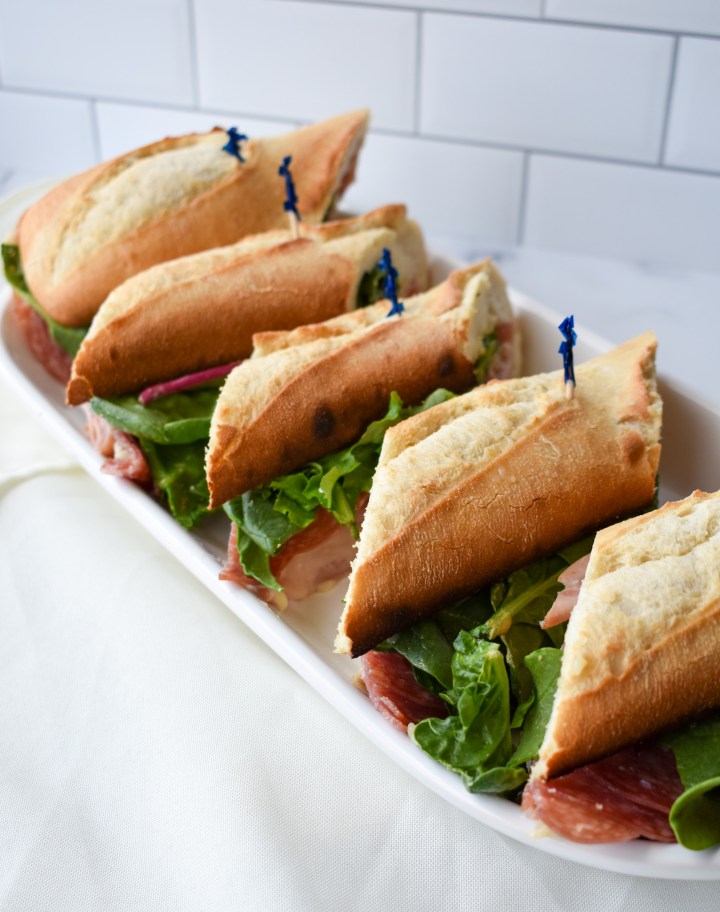
You cut a baguette down the middle to make a sandwich
Like this

The fact that someone have to explain this, is kinda funny
Yeah this is NoStupidQuestions so we should only have high level discourse.
Plus, being on here it’s difficult to tell if it’s a joke or general ignorance
I think OP should at least explain why they had this question. Such as being an alien from another planet, being visually impaired, grew up in a remote amazon tribe, or whatever.
Not only that, baguettes go great with lots of cheeses.
They also go great with dipping in olive oil and balsamic vinegar.
Combine the two ideas and make cheesy garlic bread with them.
And soups.
Pro tip: Cut the baguette in a 45° angle.
It makes the first bite easier, and it looks better.
45° relative to what?
I see.
Instead of cutting it off at a right angle you cut it at an angle. Personally I’m French and yeah I know of the technique but I’m not the biggest fan necessarily. Works best if you’re making 2 sandwiches out of 1 baguette and fill it up first before doing the middle cut.
Yeah I get it because the other person posted an image. I was confusing the slice you make to partition the baguette with the one you use to open it up to put fillings in.
Yeah I get it because the other person posted an image. I was confusing the slice you make to partition the baguette with the one you use to open it up to put fillings in.
Depends if they are baked in a container or not.


ELI5: dough can take any shape you give it.
You can load the dough into a metallic shape and close it with a lid, and you’ll get picture 1.
Or you can make a ball out of it and leave it be on a flat surface, and it will naturally expand to look like picture 2.
Side question: narrow shape makes baguette have a more crispy texture, which many people like. It’s also usually produced using a special kind of sourdough, which makes it have unique and rich taste. People eat it as is (just biting it from one end to another) or make small open sandwiches by cutting it in slices and putting all sorts of toppings on top of them.
I saw someone just cut it down the middle and make a long skinny sandwich with one. I didn’t even know that was legal.
I like the idea of the metric subway sandwich being a metre-longue
Try a jambon-beurre, incredibly simple, incredibly delicious.
Why would you want to bake in a container vs a flat surface? Why are some types of bread one shape, and others another? Is it just tradition, or is there some practical aspect?
Baking in a rectangular shape allows you to make a space efficient bread that you can easily stack and transport. Also, it is very predictable, can fit neatly into your toaster, and can be cut in triangles.
Making bread on a flat surface allows you to minimize costs of entry (not only don’t you need the forms which are relatively cheap, you can go with simpler/cheaper ovens), and this kind of bread has a more pronounced crust, which many people like.
Also, rectangular bread is harder to leaven for a long period of time as it comes with numerous technological complications down the production line. This affects the aroma composition, making rectangular bread less attractive for those who want the traditional “bread” taste.
Baguette, as I already mentioned, has a unique crust and crumb texture defined by the shape and baking conditions. Many people like it that way.
Because the dough was a different shape before baking.
You can beat a baguette with a golf club, a truncheon, or even another baguette.
US , EU and FR variants.
Side question: Why do people buy baguettes? Do they make sandwiches with them?
Sometimes, sometimes just eat with butter. They make good toasts too.
How do you even make a sandwich from them?
Just cut it open and put the ham and cheese inside it, not much to it really. Either cut the slice in half if I’m feeling poor or fold it in two if I’m feeling rich.
IMHO, I don’t know why people buy those sliced white bread loafs. That bread is weak sauce.
Whole grain is infinitely better.
The average american is conditioned from birth to prefer mediocre, bland, mass-produced food options with highly refined ingredients and/or highly processed foods with way too much sugar and artificial flavoring.
White bread is the lamest thing. Even “artisanal” bread in america is really just white bread in disguise, unless you know what to look for. I’ve even seen breads labeled as “with whole grains” that are actually just white bread with a few whole grains added in, just enough that they can put it on the label. I fucking hate the food industry here.
Oh, and fun fact: in Europe they call sliced bread “toast” because the only use they have for it is to toast it. Literally any other purpose and they choose a better bread.
Which country? The ingredients of a sliced white loaf vary significantly across the planet. Here in Britain it’s (re)fortified with a lot of the things the bleaching process might otherwise take out, but those are pretty much the only additives. No sugar or preservatives. Keep a loaf in a warm cupboard for a week and it will visibly moulder.
But, one thing that generally doesn’t vary is the price.
It’s often the cheapest loaf by weight sold by any supermarket or bakery, so it’s a staple for a lot of people, weak sauce or not.
That bread looks meh, but there are plenty of great white slice bread options, particularly if you’re a toast fan.
Totally agree. Sliced bread is great. But that white bread sandwich which stuff. Bleh.
personally i eat the whole baguette.
With butter.
For dipping in Soup, you fool
Is this a trick question?
Look for baguette sandwich in DDG
You just slice it horizontally for that.
Well, there’s a number of reasons for the shape of the various bread types. The dough type - from the kind of flour used, through the resting time, fermentation time, raising agent (let it be any of a variety of yeast products, wild yeast aka sourdough starter, baking powder or baking soda, there’s tons of options), how hydrated it is, and so on. The oven type and baking approach. The purpose of the bread.
Your first picture is of a standard toast or sandwich bread. It’s supposed to be a fairly loose, soft bread with a soft crust and an engineered shape for easier baking - with conduction baking on all sides except the top (here conduction baking refers to the fact the sides and bottom of the bread is held in place by a heated metal tray, transferring heat directly without letting air or steam escape, resulting in the soft crust). A more industrial yeast type is used (usually dry or instant yeast), which result in relatively small gas bubbles, giving it a dense but fluffy interior. The flour is usually a light wheat flour, and both resting and fermentation times are low - that’s why it’s a more industrial bread, you mix the ingredients, let the mixture sit for 30-60 minutes then bake it, easily automated.
The second picture is of a sourdough loaf. This usually uses wholemeal wheat flour, often mixed with rye or other grains for better texture, and is a fairly tedious bread to make with multiple stretch and fold sequences and long resting periods, allowing lots of gluten to form, which means every stretch and fold sequence doesn’t mix the dough but rather layers and shapes it. The yeast comes from a sourdough starter, and is allowed to ferment longer, which is why you get an intense flavour. It bakes quick in a Dutch oven first covered then uncovered, allowing it to fluff up but then shape a hard crust. You get much larger bubbles and an internal structure of long strands of gluten forming swirls and such.
Then the baguette, it uses a different approach to sourdough but with a similar effect. Unlike sandwich bread, the dough for baguettes - as well as what I’d call “European medium bread” (medium here meaning the hardness and bakedness of the crust) - a crispy crust that isn’t as well baked as a sourdough, but also isn’t soft, with a well developed gluten structure, using more predictable yeasts (again usually instant quick yeast or dry yeast, or in some areas, live yeast cubes). Mind you the baguette you’re showing is more of a hypermarket style baguette that is intentionally baked to a lesser darkness, and traditional baguettes are more on the golden brown part of the scale.
Overall, the kind of flour determines the flavour, but also the raising and resting times. Some flours (especially wholemeal or grain mix flours) need more time as the more complex proteins and sugars take more time to be broken down by the yeast thus they rise slower. Hydration determines how tough the dough is to shape (e.g. pasta is only hydrated by the eggs, making it a hard, dense dough, pizza needs to be flexible so it’s high hydration, and it gets extra raise in the oven as the water quickly evaporates). Yeast determines the flavour, the raising time, and in the final product, the texture and airiness. The baking method can fuck a lot with the texture. A regular convection oven can dry the crust out making it tough and thick, forming quickly and stopping the bread from rising, but adding some ice in a pan at the bottom can generate enough steam to let the bread rise properly by delaying the crust hardening. Same idea for sourdough using a Dutch oven, you create a high moisture environment, a steam box, to keep the crust soft while the bread rises, then remove it at the end so the crust can cripsen and brown. The sandwich bread is medium hydration thus it keeps the sides moist while they bake, giving it that brown but soft crust. If you were to plop the same dough just into the oven, without the baking shape, due to there being little to no gluten development, it would just fall apart and harden into the world’s shittiest giant cookie.
But also you can bake bread in a Dutch oven over an open fire, giving a more rustic style bread with thick, chewy, but also cripsy crust. Toss the same dough with lower hydration into a circle and onto an upside down pan in the same fire and you got some awesome flatbread with a nice center air pocket you can open up and stuff with meat.
Then, you can decide to just fuck it and add as much high fructose corn syrup as possible without fucking up the bread, and you get American style bread.
Beautiful answer!
A small point from someone working alongside bread industry - small bubbles in toast/sandwich bread are not due to the type of yeast used, but due to intentionally low time for second stage mixing and, as you mentioned, low time for resting and leavening. You can absolutely create huge bubbles using the very same yeast, though, if that’s your goal.
Ah, a fellow bread bro
I’m not even a bread bro, I just happen to have ADHD and got a few hyperfocus sessions into sourdough 😭
Uh,Sir?
ADHD and got a few hyperfocus sessions into sourdough
Is the nearly the verbatim senior qualification for certification from the charter. Section 2-14, p.12.
Your certificate, membership card and lapel pin should be in the mail, but we haven’t fully caught-up from the Pandemic breadocalypse.
Either way, welcome your High Breadbroness.
Baguettes are delicious, use a knife if you want to do a sandwich, what’s the difficulty?
One word: Bánh mì
Regarding your main question: you don’t fit a square in a round hole.
That’s two words.
deleted by creator
Well lookee here fellas, it looks like we got a fancy pants that can count to 2!
Mama always said, “If you can’t count to two, you’ll never do.”
Garlic Bread.
I took a trip to Tahiti a couple years back, which is a French territory. Baguettes everywhere. Fellows sold sandwiches with baguettes as the bun. French toast was day old baguettes and phenomenal. Sometimes you just ate baguettes and saw people riding their mopeds with a bag of baguettes. It’s versatile and great.