

- cross-posted to:
- world@lemmy.world
- cross-posted to:
- world@lemmy.world
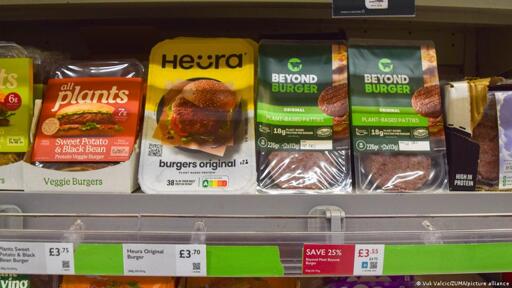
The measure was introduced by French conservative lawmaker Celine Imart, who argued it would prevent confusion with traditional meat products.
The measure was introduced by French conservative lawmaker Celine Imart, who argued it would prevent confusion with traditional meat products.
Your story largely hinges on this subjective description. I’ve personally never seen a product that is a vegan/vegetarian alternative of something and does not center its whole branding/appearance around that.
Lasagna is a broad term for many a dish. You’re probably thinking of Lasagna al forno, made with Ragu alla bolognese, which normally contains minced beef. If it just says Lasagna it could be any kind of casserole with the typical pasta sheets called Lasagna.
I have. It’s become more common. I see the same for gluten free and vegan etc products.
I assume some good tasting products get avoided as people assume they are inferior due to alternative ingredients so they downplay it in the hope that their market share grows. Obviously, those looking for those products will be on the lookout for the label.
It’s capitalism, still. You get a product you didn’t want by deception that is legal.
Hot deal incoming! Gluten free water! Only 50€ the bottle! Limited offer buy now!
The thing is, people following health fads or fashionable food hypes often don’t think, so you can sell them the most mundane stuff for the most outrageous amounts of money with some clever labeling.
Fact is, meat is expensive and meatless products are cheaper to produce. You could very easily see a company making meatless versions of products just to increase margins, and then saying “it’s vegetarian” as a defence when confronted.
Clear labelling stops that and helps the consumer stay informed about what they are buying. Vegetarian products don’'t have their reputation dragged through the mud by deceptive companies. Everybody wins except those who try to deceive.
Clear labelling and vegetarian sausage not being allowed to be called “sausage” are two different things though.
The EU could easily introduce labelling requirements that indicate whether a product contains meat or not, and even what kind of meat if we wanted that. We could standardize that just like we standardized the Nutriscore label.
Edit: In fact, I’d love to be able to see at a glance whether a meat replacer is soy or mushroom based.
EU already has lots of protected terms on food. Certain food types can only use the protected term if they meet some criteria (e.g. minimum content level or location of manufacture). I expect this is just trying to use the existing legal mechanism by adding “sausage” and “burger” and nothing more sinister.
I think your ideas for labelling are all good though.
The issue I have with that though is that “sausage” and “burger” are extremely generic terms.
I don’t think it makes sense to protect them in the same way that we protect “brie” or something like that.
There isn’t even one type of burger or sausage, as they can be made from any kind of meat (beef, chicken, pork, etc). We then differentiate by calling them a “chicken sauage” or a “pork sausage”. Why would “vegetarian/plant-based sausage” be any different?
I would just label it as: “Veggie-Product that looks like Burger” 😂
“The veggie-product formerly known as Burger”
“I cannot believe it’s not BURGER”
I responded to Tomtits who can’t understand how people can get confused.
You responded with the definition of lasagna…