
Does writing SVGs by hand count?
- 3 Posts
- 490 Comments
Joined 1 year ago
Cake day: January 8th, 2025
You are not logged in. If you use a Fediverse account that is able to follow users, you can follow this user.
I dislike this, not because it is anti-vegan, but because it is not very well-made as a comic. No punchline. No word play. No visual exaggeration gag. It’s too long to be a visual one-liner, and too short to establish and then break an expectation.
It saddens me to ask this, but is this AI? It has that uncanny ‘shaped like an joke but not actually a joke’ feeling genAIs produce.


 31·5 days ago
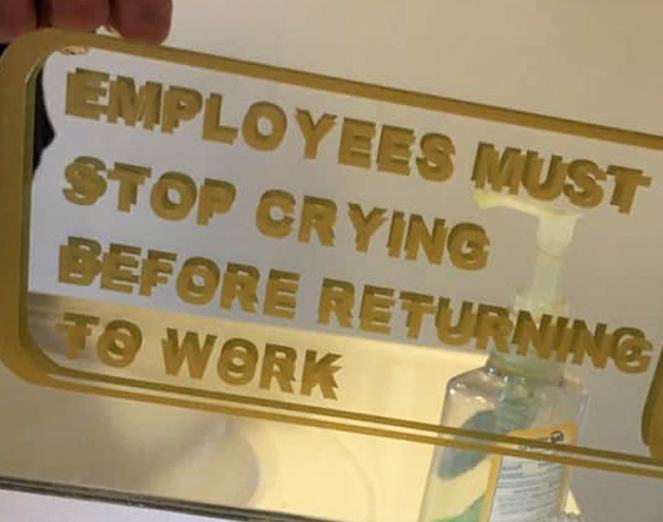
The duo arrive in Oregon again. They’ve been sent because of a series of events revolving around a pair of fraternal twins, a teenage boy and girl, who, according to locals, ‘just went crazy.’ They meet a pair of DEA agents named Scullder and Mully who have been working on an adjacent case. The town is the home of a mirror factory, and loaded with art made from mirrors. Teens in the town seem to display odd behaviour, almost psychic, but only after partying. Scully immediately asks Milder if this is demons from mirror dimensions, and Mulder decides on no evidence that it’s something mundane.
As the investigation progresses, the twins turn out to have been on a new drug, developed by a scientist who once worked as an offshoot of MK Ultra. He has developed a pair of chirally matched designer drugs that produce shared sensation and mental connection through the ‘twin connection,’ originally intended to let American interrogators connect and ‘download’ the memories of spies and communists. Now, he just wants to make money and continue his other research. The twins were an unfortunate accident, overloading their ‘twin connection’ and scrambling their identities and bodily systems until they were melded into one mind that couldn’t control two physically different bodies, causing their ‘madness,’ ‘seizures,’ and death.
User name does not check out.
 1·6 days ago
You can’t find other work. Don’t you know? This is exactly how good it will be now and forever more. /s
How would we know?
I have been. But if you finish ‘it is how it is’ with ‘and so it shall always be,’ you’ve written off any chance of anything being better than it is, right at this very moment, and might as well kill yourself.
Nope. World War III is going to be awful. If there are good times ahead, they are many, many years in the future.
Are they looking to become savvy? Linux. Are they looking to game? Steamdeck, or if they can wait a while, Steam Machine. Are they just wanting a device to check emails and watch *ahem* ‘internet videos?’ Android phone.
Any other option will be more money for less value.
There are many ways to ‘enter the dating pool.’ All of them are different.
Oh, so they’re no Welsh?

What if they were against giving the food away?
Then they’re malevolent, and thus unqualified for their position. If someone are faced with the choice between giving something away in a way that can benefit them, and just setting the thing on fire purely to prevent someone else possibly benefitting, and they choose the latter, they are unqualified for any executive position. Even if one assigns no value to the potential of helping others, they are actively choosing to lose out on almost certain benefits (through tax benefits, PR, reduction of thefts of necessity, which are appreciably likely to come from their store’s saleable stock rather than their waste) to prevent possible, but improbable, losses. That is actively choosing a worse outcome for the company they are ostensibly working to serve. Failure.
what if their worry is that someone would hide the stuff till it expires to give more away.
Then either:
A) The person is committing malfeasance and can be audited, as all managers should be anyway, and fired for actual harm, (which is still unlikely to cause enough damages to actually be a threat to the company, because if it caused an appreciable dip in profits, they’d fire them for incompetence without even needing a detailed audit)
or B) they can demonstrate to the management they are doing something that actually works out in the favor of the company, and the halfwits would be firing someone who found a way to turn trash into money.It is idiotic mismanagement to throw away someone with years of experience because they might do something that most people wouldn’t think of. Even an unpaid intern has enough access such that they might choose to misappropriate something of value. If you fire everyone who might take advantage of their access for misappropriation, there will be no employees, just a building stripped even of its copper wiring because you couldn’t trust a security guard to have keys.
Most managers don’t get the discretion to break protocol when they feel like it.
This is a statement of current failure, not a reason not to improve. I’m saying something like ‘It’s a bad idea to cut your hands with a knife,’ and your response is something like, ‘But in all the kitchens I’ve worked in, people cut themselves all the time.’ Something bad doesn’t become good just because it’s common. If a job can be accomplished just blindly following a list of prescribed rules and procedures, that’s a minimum wage job or a job in need of automation, not an executive position for a human.
If you don’t trust someone to appropriately handle waste, you don’t trust them enough to be a manager.
Giving them to the pantry instead of keeping them for himself is immaterial to their rules.
This is prime executive laziness. In this case, that should warrant an investigation by upper management. If the regional director fired an otherwise productive manager for what really would amount to ‘not getting a receipt for tax purposes,’ one has to question whether they’ve been promoted beyond their capabilities. Rules are for people who aren’t trusted to apply critical thinking to their job, i.e. relatively new minimum wage workers. Managers are supposed to be people with enough education, experience, and established trust to make decisions on behalf of the company. If they aren’t trusted, they shouldn’t have been made a manager.
 1·9 days ago
I mean, given the problems the world currently faces, both are fairly optimistic. 50 years is a long time now. Nuclear treaties are expiring and the people in charge of the nuclear powers don’t seem the kind to decrease their nuclear armament, or make rational decisions regarding their use. A shifting climate could (not necessarily definitely will but certainly could) destroy our ability to feed ourselves at scale, creating a world where people are too concerned about food to worry about building robots or self-actualization. Clean water sources are becoming rarer and harder to access, so people might be too focused on fighting over water to worry too much about anything else. And the fun part is none of these are mutually exclusive. We could have a future where part of the world is a glowing crater, the equator is a sun blasted hell, and the Canadians and Siberians are the only survivors, fighting each other over what’s left of the bioaccumulating-poison-laden arctic fish as they shout their battlecries, words with a meaning no one remembers anymore; ‘SORRY!’ ‘BLYAT!’
All of them, and I haven’t even looked. If anyone is horrible, we all are horrible. My enjoyment of something they did does not change that.
 4·12 days ago
My personal context turned that title into a joke. Just listened to a guy talking about the ‘AI kills junior jobs, so there won’t be a way to gather the experience that readies people for senior jobs,’ and the follow on was ‘when the older subject matter experts retire or die, they will take decades of experience and specialized knowledge with them, leaving no one with the skills needed to advance any field.’ Then I see that title.
Coming at this from a slightly different direction: what would be the issue with him taking literally any drug if he’s already in custody? Do they think there are ‘break out of jail’ pills? If he was literally just taking recreational drugs, wouldn’t that just give them an even clearer ‘probable cause’ to hold him? If they have no duty to enforce the law, they can’t be held responsible for letting it happen. If he takes cyanide and keels over, doesn’t that just do what the cops want and ‘take another criminal off the streets?’ They don’t care about his continued life or they’d be bringing in a doctor on first request. There is zero downside for the cops to just letting people take whatever they want.
There are ads on Lemmy? I’ve never seen one.
But, like so many things in this world, if you ask ‘why is this a thing?’ the answer is almost always ‘idiots exist.’ A handful of idiots DO click on ads and buy the products, download the malware, etc. It’s not much but the 30 real people lend legitimacy to the 970 ‘totally real people’ who ‘totally clicked on the ad but just didn’t buy anything’ according to the metrics, and it’s seemingly impossible to sell anything without paying rent to the marketers because it’s essentially analogous to nuclear arms; if no one had it, everyone would be happier, healthier, and safer, but if they have it and you don’t, you lose.



Instant subscription.