

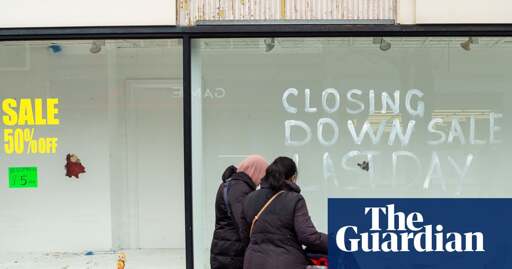
14 years of tories and now it’s an issue.
I’m a bit confused on the whole high street thing. Surely it’s decaying because no one is using it, because it’s cheaper and more convenient to do it online or at a supermarket?
In which case wouldn’t throwing money at various assortments of charity shops, galleries, tea rooms be a waste of taxpayers money anyway?
Some of it is definitely connected to that - but the majority (at least in places I live and work) is the unit rents being kept artificially high by the landlords, which are often investment or pension companies.
They won’t drop the rent, and in fact keep increasing it - then of course small businesses close down and large businesses move to these out-of-town retail parks with cheaper rents and huge carparks, but they are generally only accessible to richer people with cars (which is good for their business, too - those people can buy trolley-loads to fill a car instead of basket-loads to fill a carrier bag).
The reasoning behind keeping the rents high and shops empty is roughly:
If a shop unit was once (in its heyday) worth £20,000 a year in rent, then if they dropped the rent to £10,000 they’d get someone using it, and there’d be a shop on the high street… but their “investment asset” is only “worth” £10,000 a year.
If they instead keep the rent at £20,000, then nobody uses it and there’s no shop on the high street, but their “investment asset” is still “worth” £20,000 a year. They can borrow money and spend against this theoretical value.
When every shop on the street is owned in this way, the shops are all empty and useless to people, but their theoretical rent value stays high, so the investment company can keep using it as an asset and doing cunty money stuff with it to make extra money. Meanwhile, there are no shops.
This isn’t a bad plan, but it’s a bit of “wallpapering over the cracks” - letting people use the empty shop units is good, but it would be better if they weren’t all squatted by these investment companies in the first place.
If they were to do something like “City centre compulsory purchase orders without compensation” for long-term absentee commercial landlords, then I think the problem would solve itself pretty quickly. That might be a little extreme, but moving a few steps in that direction would probably be worth looking at.
Since 2010 central government funding to local authorities has collapsed, leading to increases in business rates, making the high street more challenging for business.