

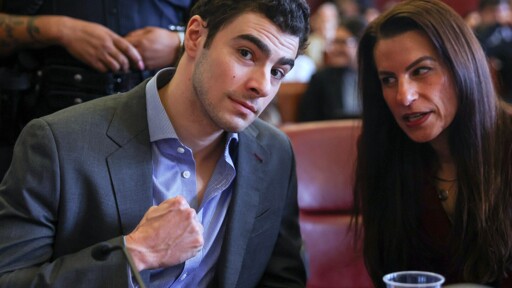
Moments after Luigi Mangione was handcuffed at a Pennsylvania McDonald’s, a police officer searching his backpack found a loaded gun magazine wrapped in a pair of underwear.
The discovery, recounted in court Monday as Mangione fights to keep evidence out of his New York murder case, convinced police in Altoona, Pennsylvania, that he was the man wanted in the killing of UnitedHealthcare CEO Brian Thompson in Manhattan five days earlier.
I’m so torn by this one… assuming he did it, if it wasn’t about killing the very assuming asshole that got shot, he should not get free because of a technicality. I mean if it was another rando that committed a crime against a lambda not one would cheer about a criminal escaping justice due to a technicality. Or so I hope. But since the guy who was shot down was feasting on misery it’s a very tempting thing to wish for. Personally I would rather that we got the jury thingy where they all agree that no crime was committed instead or something along those lines I don’t remember the specifics about nullification.
That “technicality” is a critical part of our criminal justice system. I’d much rather a criminal be set free than set the precedent that due process is optional
Allowing exceptions here would open the door to all sorts of corruption. What would then stop the president from treating all his political opponents the same way? Have them all raided without cause and “find” all sorts of evidence
By the way, the jury thing is jury nullification. The basic concept is that if a juror feels a law is unjust (or any other reason), they can vote not to convict even if the burden of proof was met for a conviction. The courts can’t tell the jury their verdict is incorrect. The only recourse is an appeal (which can’t happen in an acquittal due to double jeopardy)
Jury nullification was used quite a bit in the North before the Civil War. Many Northern juries chose to acquit violations of the Fugitive Slave Act because they felt the law was unjust
Let’s say that the most generous past examples are followed and the evidence found on his person and statements he made following his arrests are off the table as evidence. There is still his history, lack of alibi, clothing, and the gun mod he printed. He’s still guilty.
Exactly. In the past few decades there have been many examples of falsely accused prisoners being exonerated by new evidence or corrupt convictions. Not to mention those that were executed before they could be found innocent.
That’s why it’s crucial that we hold our justice system to the highest standard. Not only because we want to find the perpetrator, but to ensure that we’re not convicting an innocent person. If the price of that is a few criminals get to escape justice, so be it.
I think the “risks” of letting a potential killer go free are reduced if the chances of any sort of repeat crime are distant.
I remember a sitcom spy-hero type show had a dilemma like this. A bad guy offers the good guys a large sum of money they can use to help unfortunate people he victimized, in exchange for them leaving him alone. He’s retired, has no plans, or even means, to continue any horrible acts, so it’s entirely down to whether they seek retribution for the bad stuff he’s done rather than use the opportunity to help and protect people.
I feel like the risks of Mangione killing again after being literally worshipped for killing the first replaceable suit are quite high. His innocent plea is telling that he is not at all repentant.
Personally, I’d say there’s another layer to it. You touched on it earlier, but consider also the risk this man poses to your average member of society. To do that, assuming he did it, you need to consider his motives—which is protest, at the core of it. There’s who the victim was, absolutely, but there’s also his motive. Based on the context we have, I don’t see him as a threat.
Jury nullification isn’t that they agreed crime wasn’t committed, but rather that they refuse to agree on a guilty verdict because they don’t agree with the law. It’s sort of a natural loophole in jury responsibility and enforcement.
See that’s kind of the trap you fall into with it. People treat jury nullification as a third option, but at the end of the day they give the verdict “not guilty” in those exact words despite how they feel about him doing the crime. If they announce “guilty but we don’t mind it” then the verdict is going to be guilty and the judge will be in charge of sentencing.